

A sausage making machine, also known as a sausage stuffer or sausage filler, is a specialized piece of equipment designed for efficiently producing sausages on a commercial scale. It automates the process of filling casings with seasoned ground meat or meat blends, allowing for consistent and precise sausage production. These machines typically consist of a hopper for holding the sausage mixture, a piston or auger mechanism for pushing the mixture into the casing, and various attachments for different sausage casing sizes and types. Sausage making machines come in a range of sizes and capacities to accommodate different production needs, from small-scale operations to large-scale industrial facilities. They are widely used in meat processing plants, butcher shops, delis, and foodservice establishments to streamline the sausage making process, improve efficiency, and ensure uniformity in sausage products.
Advantages of Sausage Making Machine
Increased efficiency
Sausage making machines automate the filling process, significantly reducing the time and labor required to produce sausages manually. This increased efficiency allows for higher production volumes, enabling businesses to meet demand more effectively.
Consistent product quality
By standardizing the filling process, sausage making machines ensure uniformity in sausage size, shape, and filling density. This consistency results in uniform sausage products with consistent taste, texture, and appearance, enhancing customer satisfaction and brand reputation.
Versatility
Sausage making machines come with various attachments and accessories that enable producers to create a wide range of sausage types, sizes, and casings. This versatility allows businesses to offer diverse sausage products to cater to different customer preferences and market demands.
Cost savings
While the initial investment in a sausage making machine may be significant, the long-term cost savings can be substantial. By reducing labor costs, minimizing product waste, and increasing production efficiency, sausage making machines help businesses improve profitability and competitiveness in the market.


Why Choose Us
Professional team
Our professional team collaborate and communicate effectively with one another, and are committed to delivering high-quality results. They are capable of handling complex challenges and projects that require their specialized expertise and experience.
One stop solution
We can offer a range of services, from consultation and advice to product design and delivery. It is a convenience for the customers, as they can get all the help they need in one place.
Innovation
We are dedicated to improving our systems continually, ensuring that the technology we offer is always cutting edge.
24h online service
We try and respond to all concerns within 24 hours and our teams are always at your disposal in case of any emergencies.
Types of Sausage Making Machine
Electric sausage filler machine
An electric sausage filler machine is a versatile and efficient piece of equipment designed for automating the sausage filling process in commercial food production settings. It utilizes electric power to power the filling mechanism, which typically consists of a piston or auger system that pushes the sausage mixture into casings. These machines offer precise control over filling speed, portion size, and pressure, allowing for consistent and uniform sausage production. With various attachments and accessories available, electric sausage filler machines can accommodate different sausage types, sizes, and casings, offering versatility and flexibility to meet diverse production needs. Additionally, they are designed with hygiene and food safety in mind, featuring easy-to-clean surfaces and removable components to ensure compliance with sanitation standards.
Hydraulic sausage filler
A hydraulic sausage filler is an advanced and powerful piece of equipment used in commercial sausage production facilities. It operates using hydraulic pressure to power the filling mechanism, which typically consists of a piston or auger system. This system ensures precise control over the filling process, allowing for consistent and uniform sausage production. Hydraulic sausage fillers are known for their high capacity and efficiency, making them suitable for large-scale production operations. They offer versatility in filling various types of sausages and can accommodate different sizes and casings. Additionally, hydraulic sausage fillers are designed with hygiene and food safety standards in mind, featuring easy-to-clean surfaces and removable components.
Hydraulic sausage stuffer
A hydraulic sausage stuffer is a sophisticated and robust machine used in commercial food processing operations to streamline the sausage filling process. It operates by utilizing hydraulic pressure to power the filling mechanism, typically consisting of a piston or auger system. This hydraulic system provides precise control over the filling process, allowing for consistent and uniform sausage production. Hydraulic sausage stuffers are renowned for their high capacity and efficiency, making them ideal for large-scale production facilities. They offer versatility in filling various types of sausages and can accommodate different sizes and casings. Furthermore, hydraulic sausage stuffers are designed with hygiene and food safety considerations in mind, featuring easy-to-clean surfaces and removable components.
The working principle of a sausage making machine involves automating the process of filling sausage casings with seasoned ground meat or meat blends. Typically, the machine consists of a hopper where the sausage mixture is placed, a piston or auger mechanism driven by a motor, and various attachments for different sausage casing sizes. As the machine is activated, the piston or auger pushes the sausage mixture through a nozzle into the casing, filling it uniformly. The operator can control the filling speed and portion size, ensuring consistency in the sausage products. The machine's design allows for efficient and precise filling, streamlining the production process and maintaining quality standards in sausage manufacturing operations.

How Does a Sausage Making Machine Work
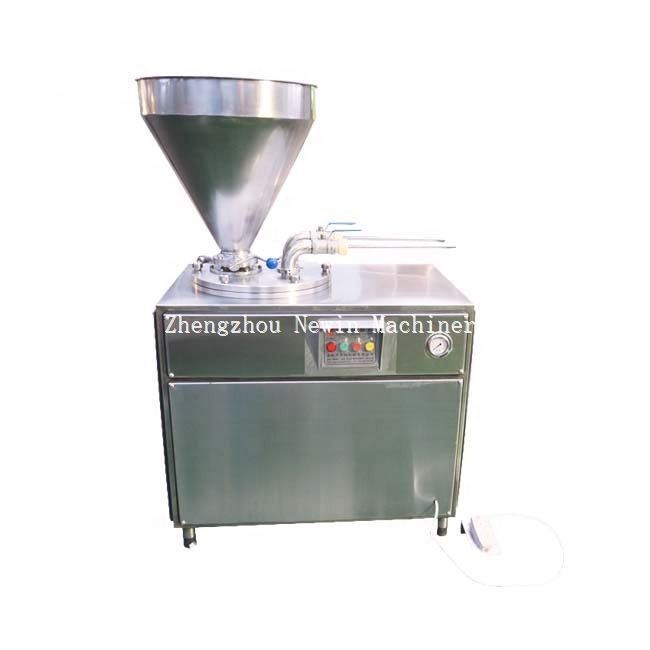
A sausage making machine works by automating the process of filling sausage casings with seasoned ground meat or meat blends. The machine typically consists of a hopper where the sausage mixture is loaded, a piston or auger mechanism driven by a motor, and various attachments for different sausage casing sizes. When the machine is activated, the piston or auger mechanism begins to move, pushing the sausage mixture from the hopper into the casing. The operator can control the filling speed and portion size using the machine's controls, ensuring uniformity in the sausage products.
As the sausage mixture is forced through the nozzle into the casing, it fills the casing evenly, without air pockets or gaps. The nozzle may have different shapes and sizes to accommodate various types of sausages and casings.The machine's design allows for efficient and precise filling, streamlining the production process and maintaining consistent quality in sausage manufacturing operations. Additionally, modern sausage making machines often feature advanced controls and automation technologies to further enhance productivity and efficiency.
What Are the Main Components of a Sausage Making Machine
Hopper: The hopper is a container where the sausage mixture is loaded before being fed into the filling mechanism. It may have a large capacity to hold a significant amount of sausage mixture, allowing for continuous operation without frequent refilling.
Filling mechanism: The filling mechanism is responsible for pushing the sausage mixture from the hopper into the casing. This mechanism is usually driven by a motor and can be either a piston or an auger system. The piston or auger moves the sausage mixture forward, ensuring consistent and uniform filling of the casing.
Nozzle or tube: The nozzle or tube is the part of the machine through which the sausage mixture is extruded into the casing. It may come in various shapes and sizes to accommodate different types of sausages and casings. The nozzle ensures that the sausage mixture is evenly distributed within the casing, without air pockets or gaps.
Controls: Sausage making machines often feature controls that allow the operator to adjust parameters such as filling speed, portion size, and casing diameter. These controls ensure precise and customizable filling, allowing for consistent quality in the sausage products.
Motor: The motor provides the power necessary to drive the filling mechanism. It may be electrically powered or, in the case of hydraulic sausage making machines, hydraulically powered. The motor's speed and torque determine the rate at which the sausage mixture is fed into the casing.
Frame and housing: The frame and housing provide structural support and protection for the internal components of the machine. They are typically made of stainless steel or other durable materials to withstand the rigors of commercial food production environments.
What Types of Sausages Can Be Made Using a Sausage Making Machine
These sausages are made from raw meat and seasonings, without undergoing any curing or fermentation process. Examples include breakfast sausages, Italian sausages, and bratwurst.
Cooked sausages are precooked before packaging and consumption. They can be made from a variety of meats and may include added ingredients such as cheese, vegetables, or spices. Examples include hot dogs, frankfurters, and smoked sausages.
These sausages are seasoned and cured before being smoked to impart flavor. They can be made from various meats and may include ingredients such as garlic, paprika, and herbs. Examples include kielbasa, andouille, and chorizo.
Dry-cured sausages are fermented and air-dried, resulting in a firm texture and intense flavor. They are typically made from pork and may include ingredients such as salt, spices, and lactic acid bacteria cultures. Examples include salami, pepperoni, and soppressata.
With the growing popularity of plant-based diets, sausage making machines can also be used to produce vegetarian and vegan sausages made from plant-based ingredients such as tofu, seitan, beans, and vegetables.
Automation
A sausage making machine automates the filling process, whereas manual methods require hand-operated equipment or techniques to fill casings. This automation allows for faster and more consistent filling, reducing labor and increasing efficiency.
Precision
Sausage making machines offer precise control over filling speed, portion size, and pressure, resulting in uniform and evenly filled sausages. Manual methods may lack this level of precision, leading to variations in sausage size, shape, and filling density.
Capacity
Sausage making machines typically have a higher capacity than manual methods, allowing for the production of larger quantities of sausages in a shorter amount of time. This increased capacity is particularly beneficial for commercial food production operations.
Hygiene
Sausage making machines are designed with hygiene and food safety in mind, featuring easy-to-clean surfaces and removable components. This ensures compliance with sanitation standards and minimizes the risk of bacterial contamination. Manual methods may be more prone to hygiene issues if proper cleaning and sanitation practices are not followed.
Consistency
Sausage making machines produce consistent results with each batch, ensuring uniformity in sausage size, shape, and filling. Manual methods may result in greater variability due to differences in operator skill and technique.
What Safety Features Are Typically Included in a Sausage Making Machine

Emergency stop button
A prominent emergency stop button allows operators to quickly halt the machine's operation in case of emergencies or unsafe conditions. Pressing this button immediately cuts power to the machine, stopping all moving parts.
Guarding
Guarding around moving parts such as the filling mechanism and rotating components prevents operators from coming into contact with these hazardous areas during operation. This helps reduce the risk of injuries caused by accidental contact with moving parts.
Interlocks
Interlocks are safety devices that prevent the machine from operating unless all guards and access panels are properly closed and secured. They ensure that operators cannot access dangerous areas while the machine is in operation.

Overload protection
Overload protection mechanisms are designed to safeguard against excessive force or pressure in the filling mechanism. If the machine encounters an overload condition, such as a blockage or jam, it automatically shuts down to prevent damage to the equipment and ensure operator safety.
Voltage protection
Voltage protection devices protect against electrical hazards by monitoring the machine's electrical system for abnormalities, such as voltage fluctuations or shorts. These devices may automatically disconnect power to the machine if unsafe conditions are detected.
Thermal protection
Thermal protection devices prevent overheating of electrical components, motors, and other critical parts of the machine. They monitor temperatures and automatically shut down the machine if excessive heat is detected, reducing the risk of fire or component damage.
How Does the Grinding in a Sausage Making Machine
In a sausage making machine, grinding is typically achieved using a grinding mechanism or attachment designed specifically for processing meat. The grinding process involves breaking down the meat into smaller particles or a fine mince to create the desired texture for the sausage mixture.
Preparation
Before grinding, the meat is prepared by trimming off excess fat, connective tissue, and any undesirable parts. The meat is then cut into smaller pieces or chunks that can easily fit into the machine's hopper.
Loading the hopper
The prepared meat is loaded into the hopper of the sausage making machine. The hopper serves as a container where the meat is held before it is fed into the grinding mechanism.
Grinding mechanism
Inside the machine, the meat is fed through a grinding mechanism, which may consist of one or more grinding plates or blades. These components work together to break down the meat into smaller pieces as it passes through.
Grinding action
As the meat is fed into the grinding mechanism, it is forced through small openings or gaps between the grinding plates or blades. This action shears the meat into smaller particles, creating a coarse or fine mince depending on the size of the grinding plates or blades used.
Repeated grinding
For finer texture and more uniform consistency, the ground meat may pass through the grinding mechanism multiple times. This process helps ensure thorough mixing of ingredients and optimal texture for the sausage mixture.
Collection
Once the meat has been ground to the desired consistency, it is collected from the machine's outlet or discharge port. The ground meat is then ready to be mixed with seasonings, spices, and other ingredients to create the sausage mixture.
Application of Sausage Making Machine
In larger meat processing plants, sausage making machines play a crucial role in mass production of sausages to meet consumer demand. These machines are equipped with high-capacity filling mechanisms and automation features to streamline the production process and ensure consistent quality in large-scale operations.
Sausage making machines are also widely used in the foodservice industry, including restaurants, cafeterias, and catering companies. They enable foodservice establishments to create homemade sausages for use in various dishes such as breakfast platters, sandwiches, pasta dishes, and appetizers.
Sausage making machines are utilized by specialty and artisanal producers to craft unique and gourmet sausages with distinctive flavors and ingredients. These producers often cater to niche markets and emphasize quality, craftsmanship, and traditional techniques in their sausage production.
In industrial food production settings, sausage making machines are integrated into automated processing lines for mass production of sausages. These machines are equipped with advanced controls, monitoring systems, and hygiene features to ensure compliance with food safety regulations and quality standards.
What Role Does Temperature Control Play in Sausage Making Machines
Ingredient safety
Proper temperature control helps ensure the safety of sausage products by preventing the growth of harmful bacteria, such as Salmonella and E. coli, in the meat mixture. Maintaining the correct temperature during meat processing steps, such as grinding and mixing, inhibits bacterial proliferation and reduces the risk of foodborne illness.
Prevention of fat smearing
Proper temperature control prevents fat smearing, a common issue in sausage making where the fat separates from the meat mixture and forms an undesirable texture in the finished product. Cooling the meat mixture and equipment components helps maintain the integrity of fat globules, ensuring even distribution and texture in the final sausage.
Emulsification
Temperature control is crucial during the emulsification process, particularly in the production of cooked sausages, such as hot dogs and frankfurters. Controlling the temperature of the meat batter during emulsification ensures the formation of stable emulsions, where fat and water molecules are finely dispersed, resulting in a smooth and uniform texture in the cooked sausage.
Cooking and smoking
Temperature control is essential during the cooking and smoking stages of sausage production to achieve proper heat penetration, cooking uniformity, and flavor development. Maintaining precise temperature and humidity levels in cooking and smoking chambers ensures that sausages are cooked to the desired internal temperature, eliminating pathogens and enhancing flavor through smoking and caramelization reactions.
How Does the Sausage Stuffing Mechanism of a Sausage Making Machine Operate
Loading the hopper
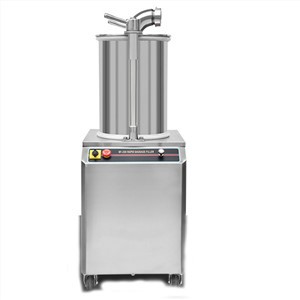
The sausage mixture, which typically consists of ground meat and seasonings, is loaded into the hopper of the sausage making machine. The hopper serves as a container where the sausage mixture is held before being fed into the stuffing mechanism.
Filling the casing
As the machine is activated, the piston or auger mechanism begins to move, pushing the sausage mixture from the hopper into the casing. The piston or auger applies pressure to the sausage mixture, forcing it through a nozzle or tube and into the casing.
Sausage length control
Some sausage making machines are equipped with features to control the length of the sausage links. This may include a mechanism to automatically cut the casing at specified intervals or a manual control for the operator to cut the casing to the desired length.
Repeat filling
Depending on the capacity of the machine and the desired quantity of sausages, the filling process may be repeated multiple times to fill additional casings. The machine's hopper can be refilled with sausage mixture as needed to continue the production process.
Finalizing the sausages
Once the casing is filled with the sausage mixture, the sausages are typically twisted or tied off at both ends to separate them from each other and form individual links. The sausages are then ready for further processing, such as cooking, smoking, or packaging.
How to Choose Sausage Making Machine
Evaluate sausage types
Think about the types of sausages you intend to make. Different machines are designed for specific sausage types, such as fresh sausages, cooked sausages, smoked sausages, or dry-cured sausages. Choose a machine that can accommodate the sausage types you plan to produce.
Assess features and functionality
Consider the features and functionality offered by different sausage making machines. Look for features such as adjustable filling speed, portion control, interchangeable nozzles for different casing sizes, and ease of cleaning and maintenance. Choose a machine that offers the functionality you need to streamline your sausage production process.
Determine power source
Sausage making machines are available in electric, hydraulic, and manual (hand-cranked) models. Choose a power source that suits your preferences and operational requirements. Electric machines offer convenience and automation, while hydraulic machines are known for their high capacity and efficiency. Manual machines are suitable for small-scale operations or situations where electricity is not readily available.
Consider space constraints
Evaluate the available space in your production facility or kitchen. Choose a sausage making machine that fits comfortably within your workspace without overcrowding. Consider the size and dimensions of the machine, as well as any additional space required for loading, unloading, and maintenance.
The cleaning process of a sausage making machine can differ significantly from manual cleaning due to the complexity of the machine's components and the need for thorough sanitation to comply with food safety standards. Here's how the cleaning process of a sausage making machine may differ from manual cleaning:
Disassembly
Sausage making machines typically require disassembly to access internal components and parts that may come into contact with the sausage mixture. This may involve removing grinding plates, stuffing tubes, nozzles, augers, and other removable parts for cleaning. Manual cleaning may involve simpler disassembly of equipment, such as knives and cutting boards.
Cleaning agents
Sausage making machines may require specialized cleaning agents or detergents to effectively remove grease, fat, proteins, and other residues from surfaces and components. These cleaning agents are often designed to break down tough stains and sanitize surfaces to prevent bacterial contamination. Manual cleaning may involve using general-purpose cleaners or disinfectants.
High-pressure washing
Sausage making machines may be cleaned using high-pressure washing equipment to remove stubborn residues and debris from hard-to-reach areas. High-pressure washing can effectively dislodge food particles and sanitize surfaces, ensuring thorough cleaning. Manual cleaning may involve scrubbing surfaces by hand or using brushes to remove residues.
Steam cleaning
Some sausage making machines may be capable of steam cleaning, which uses high-temperature steam to sanitize surfaces and kill bacteria. Steam cleaning can penetrate into crevices and corners to remove contaminants and ensure thorough sanitation. Manual cleaning may involve using hot water or steam for sanitation, but it may not be as effective as steam cleaning equipment.
Drying
After cleaning, sausage making machines must be thoroughly dried to prevent the growth of mold, bacteria, and other pathogens. This may involve air drying or using specialized drying equipment to remove moisture from surfaces and components. Manual cleaning may involve air drying or towel drying equipment and utensils.
Reassembly
This ensures that all components are properly aligned and secured for safe and efficient operation. Manual cleaning may involve reassembling equipment after cleaning, but it may be simpler and require fewer steps than reassembling complex machine components.
What You Should Know When Use Sausage Making Machine
Prepare ingredients
Use fresh, high-quality ingredients for making sausage, including meat, seasonings, and casings. Ensure that the meat is properly trimmed and chilled before grinding to achieve the desired texture and flavor in the sausage mixture.
Set up the machine
Assemble the sausage making machine according to the manufacturer's instructions, ensuring that all components are securely in place. Check for any loose parts or damaged components that may affect performance or safety.
Adjust settings
Depending on the type of sausage you're making and the desired characteristics, adjust the machine's settings such as filling speed, portion size, and casing diameter. Test the settings with a small batch of sausage mixture to ensure optimal results.
Maintain hygiene
Practice good hygiene and sanitation throughout the sausage making process to prevent contamination and ensure food safety. Clean and sanitize all equipment, utensils, and work surfaces before and after use. Wash hands thoroughly with soap and water before handling ingredients or operating the machine.
Control temperature
Maintain proper temperature control during grinding, mixing, and stuffing to ensure food safety and product quality. Keep meat and sausage mixture chilled to prevent bacterial growth, and monitor cooking or smoking temperatures for cooked sausages.
Clean and maintain
After using the sausage making machine, clean and sanitize all parts thoroughly according to the manufacturer's instructions. Remove any remaining sausage mixture and debris from the machine to prevent contamination and ensure proper functioning.
We will continue to strive to develop perfect products with a rigorous and honest attitude, and are committed to working with honest customers and dealers.

FAQ
Q: What is the primary function of a sausage making machine?
Q: Can sausage making machines be used for other food products besides sausages?
Q: What are the advantages of using a sausage making machine compared to manual methods?
Q: What are the essential features to look for in a sausage making machine?
Q: How do I choose the right size of sausage making machine for my business?
Q: What are the typical maintenance requirements for sausage making machines?
Q: Are there any safety considerations when operating a sausage making machine?
Q: Can a sausage making machine handle different types of casings?
Q: What is the typical lifespan of a sausage making machine?
Q: Are there any energy efficiency considerations when selecting a sausage making machine?
Q: Can sausage making machines be customized to meet specific production needs?
Q: How does automation in sausage making machines benefit the food industry?
Q: What are the considerations for integrating a sausage making machine into an existing production line?
Q: What are the common troubleshooting issues with sausage making machines, and how are they resolved?
Q: Can a sausage making machine be used for both fresh and cured sausages?
Q: What role does temperature control play in sausage making machines?
Q: How does the sausage stuffing mechanism of a sausage making machine operate?
Q: Can a sausage making machine handle both fresh and frozen meats?
Q: What are the maintenance requirements for a sausage making machine?
Q: How does the filling speed of a sausage making machine impact production efficiency?
As one of the most professional sausage making machine manufacturers and suppliers in China, we're featured by quality products and competitive price. Please rest assured to buy sausage making machine for sale here from our factory.
Hydraulic Sausage Filler, Commercial Hydraulic Sausage Stuffer, Electric Sausage Filler Machine